
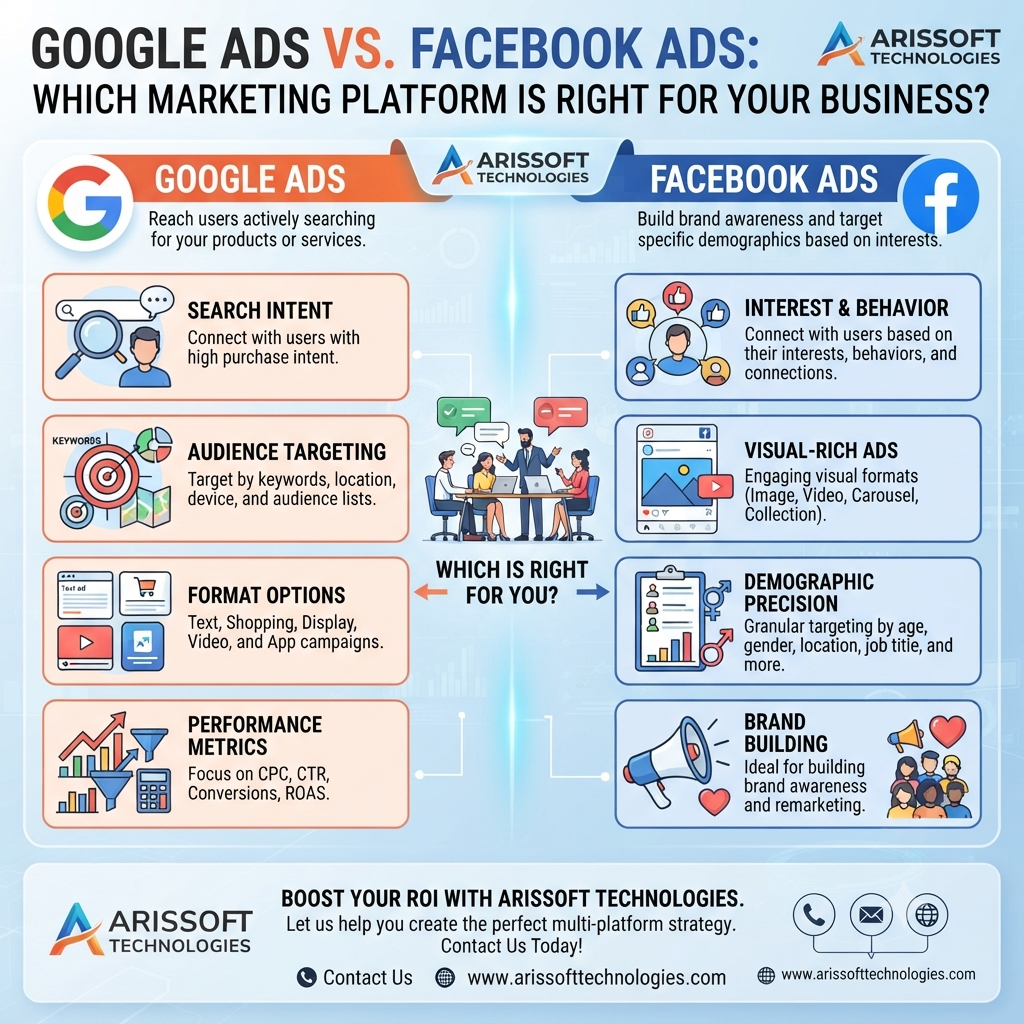
In today’s competitive digital market, businesses need more than a good product or service. They need to reach the right audience at the right time. This is where paid advertising platforms such as Google Ads and Facebook Ads can make a major difference.
Both platforms can help businesses generate leads, increase website traffic, build brand awareness, and improve sales. However, they work in different ways.
Google Ads mainly connects businesses with people who are already searching for a product, service, or solution. Facebook Ads Agency, which are managed through Meta’s advertising system, help businesses reach people based on their interests, behaviour, demographics, and online activity.
So, which platform should your business choose?
The answer depends on your business type, target audience, marketing goal, budget, and customer journey.
Google Ads is Google's paid advertising platform. Businesses can create advertisements that appear across Google Search and other Google properties.
One of its biggest advantages is search intent.
For example, someone searching for:
is already looking for a particular product or service.
A well-optimized Google Ads campaign can place your business in front of that potential customer at the moment they are searching.
Google Ads can include different campaign formats, such as:
For service businesses, Search Ads are often particularly useful because they target people actively searching for relevant services.
Facebook Ads are paid advertisements delivered through Meta's advertising ecosystem, including Facebook and Instagram.
Unlike search advertising, users generally do not need to search for your product before seeing an advertisement.
Businesses can use audience targeting based on factors such as:
For example, a doctor clinic may use Facebook and Instagram advertising to introduce a new treatment, promote a health awareness campaign, or encourage people to book an appointment.
An education consultancy could use social media ads to reach students and parents interested in higher education.
The biggest difference is intent versus discovery.
Google Ads
People usually search for something first and then see relevant advertisements.
Example:
"SEO agency in Noida"
The person has already expressed an interest in finding an SEO agency.
Facebook Ads
People are browsing Facebook or Instagram and may discover your business through an advertisement.
Example:
A student watching Instagram content may see an advertisement about B.Tech admissions even though they were not actively searching for a college at that moment.
This makes the two platforms useful at different stages of the customer journey.
Google Ads vs. Facebook Ads Comparison
|
Factor |
Google Ads |
Facebook Ads |
|
Primary strength |
Search intent |
Audience targeting |
|
Customer stage |
Often high intent |
Awareness and consideration |
|
Best for |
Services and products people search for |
Products, services, brands and offers |
|
Lead generation |
Strong for high-intent searches |
Strong with good creatives and targeting |
|
Visual content |
Important but not always essential |
Extremely important |
|
Brand awareness |
Good |
Excellent |
|
Local businesses |
Excellent |
Good |
|
Remarketing |
Yes |
Yes |
|
Content requirement |
Keywords and landing pages |
Images, videos and ad creatives |
|
Buying intent |
Usually stronger |
Can vary |
|
Testing |
Keywords, ads, landing pages |
Creatives, audiences, offers |
When Should You Choose Google Ads?
Google Ads can be a strong choice when people are actively searching for your products or services.
For example, businesses such as:
can benefit from search-based advertising.
Example
Suppose you operate a dental clinic in Noida.
Someone searches:
If your Google Ads campaign targets this relevant keyword and your advertisement appears, the user can visit your website, call your clinic, or submit an enquiry.
This is a major advantage because the customer already has a need.
Facebook Ads can be particularly useful when your business needs to create demand, build awareness, or reach a specific audience.
Facebook and Instagram advertising can work well for:
The visual nature of Facebook and Instagram makes creative content very important.
A strong image, short video, testimonial, offer, or educational creative can capture attention quickly.
One of the biggest benefits of Google Ads is its ability to capture high-intent leads.
Imagine someone searches:
"Best MBA admission consultant in Delhi"
They may be much closer to making a decision than someone who simply sees an MBA advertisement while scrolling through social media.
This doesn't mean every Google lead will convert. Keyword selection, ad copy, landing page quality, pricing, competition, and follow-up all matter.
But search intent can give Google Ads a strong advantage for many service-based businesses.
Facebook Ads for Lead Generation
Facebook Ads can also generate a large number of leads, particularly when businesses have:
For example, an education consultancy might run a campaign such as:
"NEET 2026 Counselling Support – Get Guidance for MBBS Admission."
A student or parent can see the advertisement, click it, and submit their contact details.
The quality of these leads depends heavily on the campaign strategy and the clarity of the offer.
For many local businesses, Google Ads can be extremely effective because customers frequently search for local services.
Examples include:
These searches indicate that the person may already be looking for a service provider.
However, Facebook Ads can complement local advertising by building awareness among people within a specific geographical area.
A local business can therefore use:
Google Ads → Capture existing demand
Facebook Ads → Create awareness and generate interest
If your primary goal is brand awareness, Facebook and Instagram can have an advantage because visual content can reach a large audience.
Businesses can use:
For example, a healthcare marketing agency could publish educational videos about digital marketing for doctors and then promote those videos to relevant audiences.
This can help people become familiar with the brand before they are ready to purchase.
There is no universal answer.
The cost of advertising depends on:
A highly competitive Google keyword can be expensive, while a Facebook campaign may generate inexpensive clicks but lower-quality leads.
Similarly, Facebook Ads may produce cheap leads in one industry but expensive leads in another.
Therefore, businesses should not judge a campaign only by cost per click or cost per lead.
The more important question is:
How much does it cost to acquire a paying customer?
Google Ads vs. Facebook Ads for Doctors and Clinics
For doctors and clinics, both platforms can be useful.
Google Ads
Useful for searches such as:
These searches can indicate strong intent.
Facebook Ads
Useful for:
For healthcare businesses, advertisements should also follow applicable advertising and professional guidelines. Marketing should focus on accurate, responsible information rather than unrealistic promises.
Google Ads vs. Facebook Ads for Education Businesses
Education is another industry where both platforms can work well.
Google Ads
Can target searches such as:
Facebook Ads
Can help reach:
An education business can use Facebook and Instagram to generate awareness and Google Ads to capture students who are actively searching for admission assistance.
Should You Use Google Ads or Facebook Ads?
Instead of asking which platform is universally better, consider your objective.
Choose Google Ads when:
Choose Facebook Ads when:
Can You Use Google Ads and Facebook Ads Together?
Yes. In many cases, using both can be more effective than choosing only one.
A customer may discover your business on Facebook first.
Later, they may search for your company on Google.
Another customer may find you through Google and then visit your Instagram profile before contacting you.
A combined strategy can cover different stages of the customer journey.
Example Marketing Funnel
Facebook Ads → Awareness
↓
Website / Social Media → Consideration
↓
Google Search → High Intent
↓
Landing Page → Enquiry
↓
Sales Team → Conversion
This approach can help businesses build both demand and direct-response traffic.
How to Choose the Right Advertising Platform
Before spending money, answer these questions:
1. What is your business?
A local clinic, e-commerce company, education consultancy, and B2B company may require completely different advertising strategies.
2. Who is your customer?
Identify their:
3. What is your goal?
Your goal could be:
4. What is your budget?
Start with a manageable budget and measure the results before increasing spending.
5. Do you have strong creatives?
If you plan to use Facebook Ads, high-quality images and videos are particularly important.
6. Do you have a good landing page?
Sending paid traffic to a poorly designed website can waste your advertising budget.
Your landing page should have:
Common Mistakes Businesses Should Avoid
Paid advertising can become expensive when campaigns are poorly managed.
Some common mistakes include:
Targeting Too Broadly
Showing ads to everyone can waste money.
Using Irrelevant Keywords
Google Ads campaigns should focus on keywords that have genuine business value.
Poor Ad Creatives
Weak images, videos, and messaging can reduce Facebook campaign performance.
No Conversion Tracking
If you do not track calls, forms, purchases, or other conversions, it becomes difficult to understand campaign performance.
Slow Lead Follow-Up
Even a good advertisement can fail if enquiries are not contacted quickly.
Focusing Only on Clicks
Clicks are not the final goal.
Leads, sales, appointments, and revenue are more important.
Final Verdict: Google Ads or Facebook Ads?
There is no single winner.
Google Ads is generally stronger for capturing existing demand and reaching people who are actively searching.
Facebook Ads is generally stronger for audience targeting, visual marketing, brand awareness, and demand generation.
For many businesses, the best strategy is not Google Ads vs. Facebook Ads, but Google Ads + Facebook Ads.
The right combination depends on your business, audience, budget, competition, and marketing goals.
A successful paid advertising campaign is not simply about spending more money. It is about reaching the right people, delivering the right message, sending them to the right landing page, and measuring what happens after the click.
Conclusion
If your customers are already searching for your service, Google Ads may be the right starting point.
If you need to build awareness and reach a targeted audience through engaging content, Facebook Ads Best digital marketing company Noida may be a better starting point.
And if your business wants to build a complete digital marketing funnel, using both platforms together can provide a powerful combination of visibility, engagement, leads, and sales.
 Digital Marketing Service in Noida: How to Choose the Right Services for Your Business
 How to Find the Best Digital Marketing Company in Noida: A Complete Business Guide
 Top 5 Leading Digital Marketing Companies in Noida for Business Growth
 Top Benefits of SEO Services – Boost Your Online Presence and Business Growth
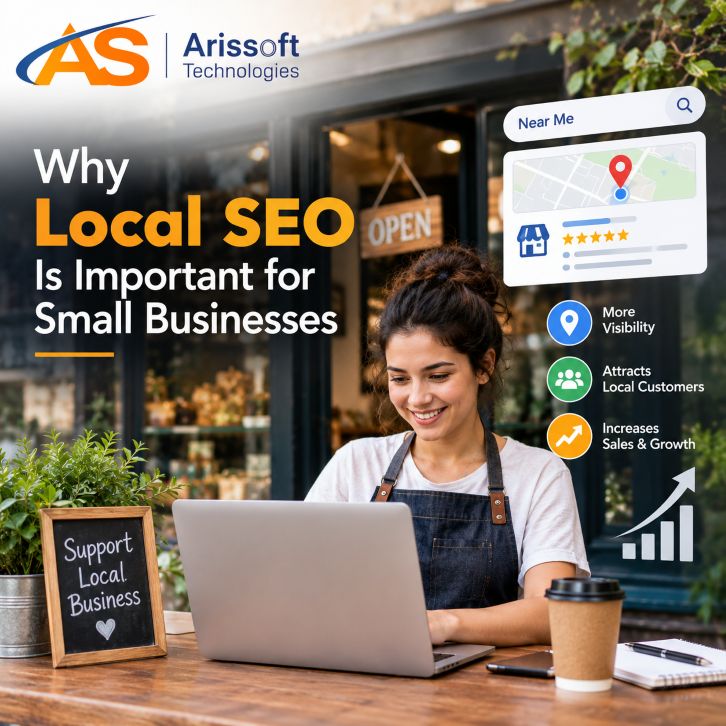 Why Local SEO Is Important for Small Businesses
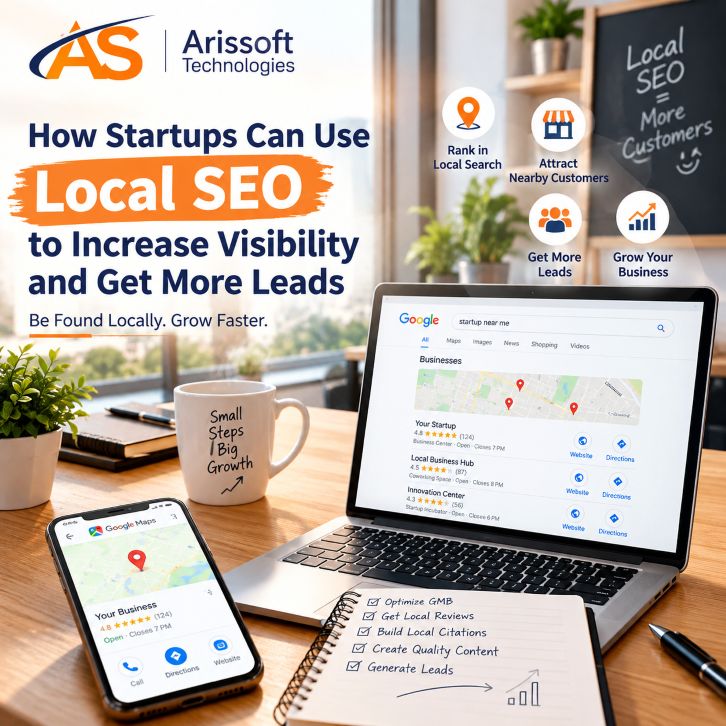 How Startups Can Use Local SEO to Increase Visibility and Get More Leads
.jpg)