
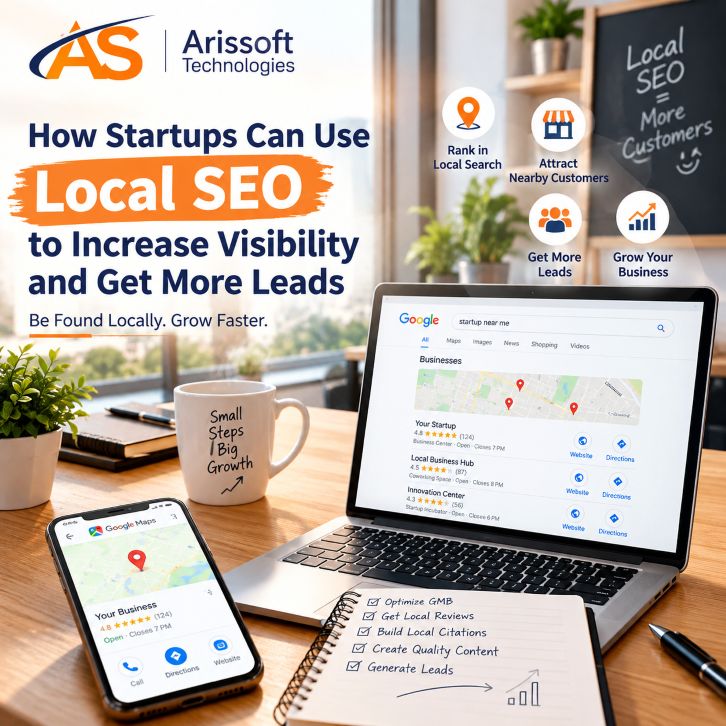
Starting a new business is exciting, but getting noticed by the right customers can be challenging. Many startups have a good product or service but struggle to attract local customers. This is where Local SEO agency Noida can make a major difference.
Local SEO helps your business appear when people search for products or services in a specific location. For example, a person searching for “digital marketing agency near me”, “website development company in Noida”, or “best dentist in Ghaziabad” is already looking for a local service.
For startups, this can be a cost-effective way to increase online visibility, attract targeted visitors, and generate more enquiries.
Local SEO (Local Search Engine Optimization) is the process of improving your online presence so that your business can appear in local search results on Google and other search platforms.
It focuses on location-based searches such as:
Unlike traditional SEO, which can target a national or global audience, Local SEO focuses on customers in a specific geographical area.
Startups often have limited marketing budgets. Competing with large companies through expensive advertising can be difficult.
Local SEO provides an opportunity to compete for customers in a specific area.
When your business profile and website are properly optimized, your startup can become more visible when potential customers search for your services locally.
For example, a startup offering website development services in Noida can target searches such as “website development company in Noida” or “web designer near me.”
Greater visibility can bring more relevant visitors to your website and business profile.
One of the biggest advantages of Local SEO is that users often have strong buying intent.
Someone searching for “SEO company near me” may already be interested in hiring an SEO company.
This makes local search traffic valuable for startups because you are reaching people who may already need your product or service.
Local SEO can support different types of enquiries, including:
A properly optimized local presence can turn search visibility into actual business opportunities.
There are several important steps startups should follow to build a strong local search presence.
A Google Business Profile is one of the most important parts of a local SEO strategy.
Your profile should contain accurate and complete information, including:
Keep your information consistent and updated.
For startups, a well-maintained profile can help potential customers understand what the business offers before they visit the website.
Selecting the correct primary category is important.
For example, a startup providing digital marketing services may need to choose a category that accurately represents its main service.
You can also add relevant secondary categories when they genuinely describe your business.
Avoid selecting unrelated categories simply because they have high search volume.
Your website should clearly communicate:
What you offer + Where you offer it + Who you serve.
For example:
Digital Marketing Agency in Noida for SEO, Google Ads, Social Media Marketing and Lead Generation.
Important local SEO elements include:
However, avoid repeatedly inserting the same location keyword. Content should sound natural and useful.
If your startup serves multiple cities or areas, dedicated location pages can help target relevant searches.
For example, a digital marketing company could create pages for:
Each page should contain genuinely useful and location-specific information.
Do not create dozens of nearly identical pages just by changing the city name. Google users should receive useful information on every page.
Keyword research helps startups understand what potential customers are searching for.
Examples include:
You can also target long-tail keywords because they are often more specific.
For example:
“SEO agency for doctors in Noida”
is more specific than:
“SEO agency.”
Long-tail local keywords can help startups attract more relevant traffic.
NAP stands for:
Name + Address + Phone Number
Your business information should remain consistent across your:
Inconsistent information can create confusion for customers and may weaken your local presence.
Customer reviews are important for both reputation and local search visibility.
Startups should encourage genuine customers to leave honest reviews after receiving a service or purchasing a product.
Good review practices include:
Never buy fake reviews or create reviews yourself.
Real customer experiences build much stronger trust.
Content marketing and Local SEO can work together.
Startups can publish useful content related to their industry and local market.
For example, a digital marketing startup in Noida could publish:
This type of content can attract people searching for local business information.
A citation is an online mention of your business, usually including information such as your business name, address, phone number, and website.
Startups can look for relevant and trustworthy:
Quality is more important than quantity.
A few relevant and trustworthy listings are generally more useful than submitting your business to hundreds of low-quality directories.
Backlinks from relevant websites can support your website's authority.
A startup can explore legitimate opportunities such as:
For example, a startup participating in a local business event may receive a legitimate mention from the event organizer's website.
Many local searches happen on smartphones.
Your website should therefore be:
Make your phone number easy to find and provide clear calls to action such as:
Call Now
Get a Quote
Book an Appointment
Request a Consultation
A visitor should not have to search through multiple pages to contact your business.
Startups can also use structured data, such as relevant Local Business schema markup, to help search engines understand important business information.
Depending on the business, structured data can communicate details such as:
Schema is not a shortcut to rankings, but it can help search engines understand the content of your website more clearly.
Visual content can improve your business profile and website experience.
Startups can upload genuine photos of:
Short videos can also help potential customers understand your business.
For service-based startups, showing your team and work process can help build trust.
Getting website traffic is only one part of digital marketing.
The next step is converting visitors into leads.
Every important page should have a clear call to action.
Examples:
Get a Free Consultation
Request a Quote
Call Our Team
Book an Appointment
Send an Enquiry
Talk to an Expert
The CTA should match the customer's intent and the service being offered.
Local SEO and paid advertising have different advantages.
Paid advertising can provide immediate visibility when you have a suitable campaign and budget.
Local SEO focuses on building organic visibility over time.
For many startups, combining both can be useful.
For example:
SEO + Google Business Profile + Content Marketing + Google Ads
can create multiple opportunities to reach potential customers.
SEO should not be viewed as a replacement for every other marketing channel. Instead, it can become an important part of a long-term customer acquisition strategy.
Many startups make mistakes when trying to improve their local rankings.
Repeating the same keyword unnaturally can make content difficult to read.
Fake reviews can damage your reputation and create trust issues.
Creating many pages with almost identical content and only changing the city name provides little value.
Different phone numbers, addresses, or business names across platforms can create confusion.
Cheap backlink packages may create more problems than benefits.
Not responding to customer reviews can make the business appear less active.
A ranking is not the final goal.
The real objective is to generate:
Visibility → Traffic → Enquiries → Customers → Revenue
Startups should track more than keyword rankings.
Important metrics include:
For example, ranking for a keyword is useful, but receiving qualified enquiries from that keyword is much more valuable.
A startup can begin with the following process:
Choose the cities or areas where you actually want customers.
Understand who you want to attract and what services they need.
Find relevant service + location keywords.
Complete your profile and keep the information accurate.
Create useful service pages and location-focused content.
Collect genuine reviews, publish useful content, and showcase real work.
Earn quality citations, mentions, and backlinks.
Monitor calls, forms, WhatsApp messages, and other conversions.
Analyze performance and update your strategy based on actual customer behaviour.
Local SEO is a continuous process. There is no universal timeframe in which every startup will achieve a specific ranking.
Results can depend on factors such as:
Some businesses may notice improvements relatively quickly, while competitive markets can require a longer-term strategy.
The focus should be on building sustainable visibility rather than promising guaranteed rankings.
For startups, Local SEO can be a powerful way to increase visibility, attract targeted visitors, and generate more leads.
A strong local SEO strategy combines a well-optimized Google Business Profile, useful website content, local keywords, genuine customer reviews, mobile-friendly design, relevant citations, quality backlinks, and effective conversion strategies.
The goal is not simply to rank on Google.
The real goal is to help potential customers find your startup, trust your business, contact you, and eventually become paying customers.
When implemented consistently, SEO company Noida can become an important long-term growth channel for startups that want to build a strong presence in their local market.
 How Does a Professional Best Web Development Company in Lucknow Build a High-Performing Website?
 Website Designing & Development Company in Meerut - Arissoft Technologies
 Which Website Development Company in Noida Is Right for Your Business to Grow Online?
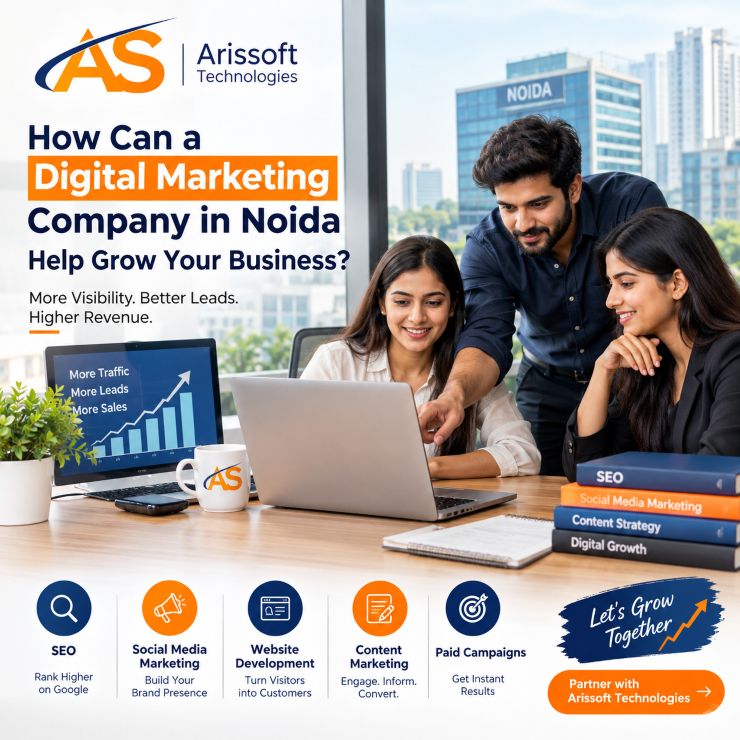 How Can a Digital Marketing Company in Noida Help Grow Your Business?
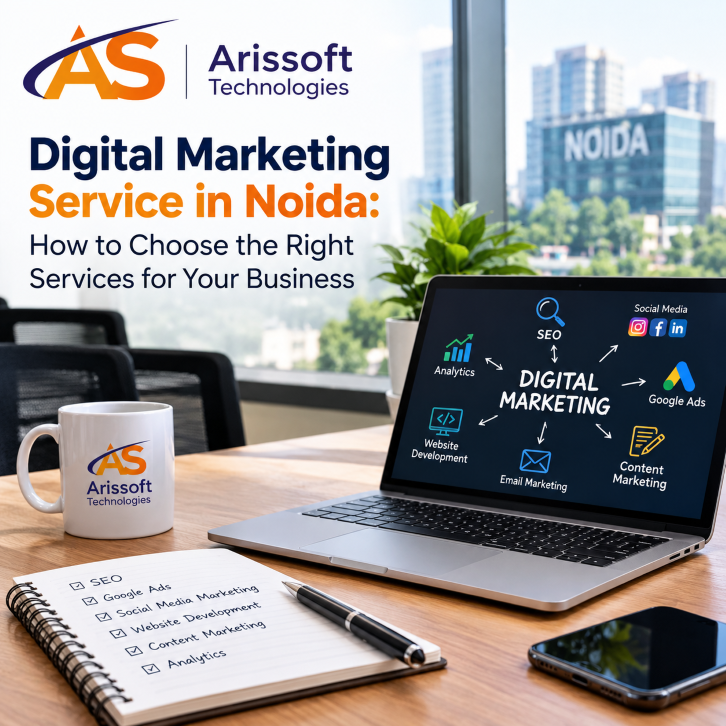 Digital Marketing Service in Noida: How to Choose the Right Services for Your Business
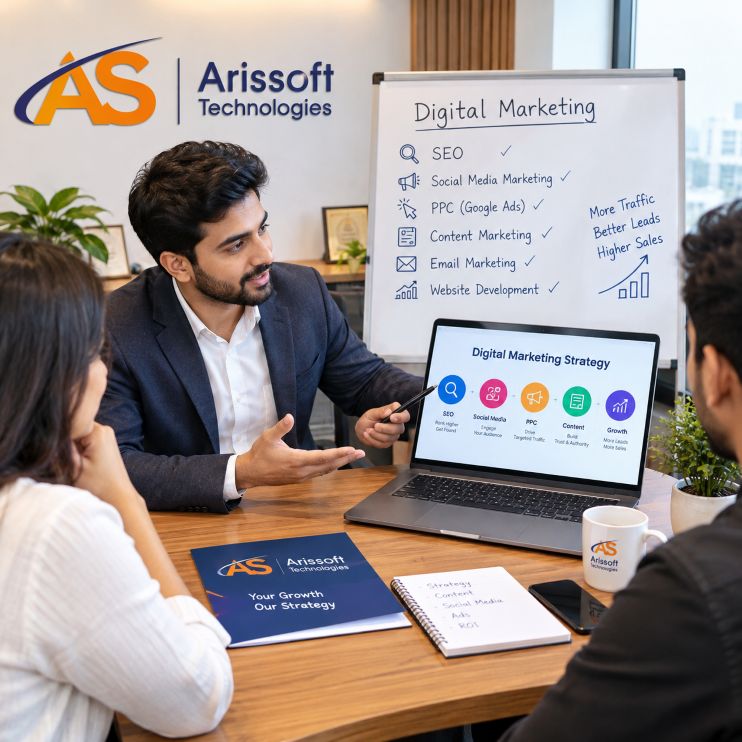 How to Find the Best Digital Marketing Company in Noida: A Complete Business Guide
.jpg)