

In today’s competitive market, businesses need more than visibility. They need measurable results, qualified leads, sales, and a clear understanding of where their marketing budget is going.
This is where performance marketing agency Noida has become an important growth strategy. Traditional advertising can still help businesses build awareness, but performance marketing allows brands to track campaigns, understand customer behaviour, and optimize spending based on actual results.
So, which one helps brands grow faster?
For many businesses, performance marketing can deliver faster and more measurable growth than traditional advertising, especially when the goal is lead generation, online sales, customer acquisition, or measurable return on investment.
Performance marketing is a digital marketing approach where campaigns are planned around measurable actions and results.
Depending on the business objective, these actions can include:
Common performance marketing channels include Google Ads, Meta Ads, social media advertising, search advertising, affiliate marketing, and other digital campaigns.
The biggest advantage is that businesses can monitor campaign performance and make changes based on data.
For example, if a Google Ads campaign generates leads from one keyword but wastes money on another, the business can adjust the campaign instead of continuing to spend blindly.
Traditional advertising includes marketing channels that have been used for decades to reach a large audience.
Examples include:
Traditional advertising can be effective for building brand awareness and public visibility.
However, measuring the exact number of customers generated from a particular advertisement can sometimes be difficult.
For example, a billboard may be seen by thousands of people, but it may not be easy to know exactly how many people contacted the business because of that billboard.
Both approaches have a role in marketing, but they work differently.
|
Factor |
Performance Marketing |
Traditional Advertising |
|
Measurement |
Highly measurable |
Often harder to measure |
|
Targeting |
Highly specific |
Generally broader |
|
Optimization |
Can be changed quickly |
Changes may take time |
|
Budget control |
Flexible |
Often requires fixed spending |
|
Audience targeting |
Detailed |
Usually broader |
|
Lead tracking |
Easier |
More difficult |
|
Customer data |
Strong |
Limited |
|
Testing |
Easy to test multiple campaigns |
Testing can be expensive |
|
Speed of optimization |
Fast |
Relatively slow |
|
ROI tracking |
Easier |
More challenging |
This difference is one of the main reasons many businesses are moving towards performance-driven digital marketing.
1. Why Performance Marketing Drives Faster Brand Growth Than Traditional Ads
The first major advantage of performance marketing agency is speed.
Traditional advertising often focuses on reaching a large audience. Performance marketing focuses on reaching the right audience and encouraging them to take action.
A business can launch a campaign and start collecting data relatively quickly.
For example, a clinic may run a Google Ads campaign targeting people searching for services such as:
“best dental clinic near me”
or
“dentist in Noida.”
The clinic can monitor impressions, clicks, calls, enquiries, and conversions.
If a particular campaign produces better results, the budget can be increased. If another campaign performs poorly, it can be modified or paused.
This ability to make quick decisions can help businesses grow faster.
2. Better Audience Targeting
One of the strongest benefits of digital performance marketing is audience targeting.
Traditional advertising generally reaches a broad group of people.
Performance marketing allows businesses to target audiences based on factors such as:
For example, an education consultancy can target people searching for admission-related information in specific cities.
Similarly, a healthcare business can target users looking for particular medical services in a specific location.
This makes marketing more relevant and can improve the chances of generating qualified enquiries.
3. Every Campaign Can Be Measured
Measurement is a major difference between performance marketing and traditional advertising.
A performance marketing campaign can track metrics such as:
This information helps businesses understand whether their marketing budget is producing results.
Instead of simply asking:
businesses can ask:
“How many people clicked, contacted us, purchased, or became customers?”
That makes decision-making more data-driven.
4. Faster Budget Optimization
Marketing budgets are limited for many businesses.
Performance marketing gives businesses more flexibility to adjust their spending according to campaign performance.
Suppose a company spends ?50,000 on two campaigns.
Campaign A generates high-quality leads at a lower cost.
Campaign B generates fewer leads at a higher cost.
The business can reduce spending on Campaign B and allocate more budget to Campaign A.
This type of optimization can happen much faster than changing a newspaper advertisement, billboard campaign, or television advertisement.
Performance marketing makes testing easier.
Businesses can test different:
For example, a company can run two versions of an advertisement:
Ad A: Get a Free Consultation
Ad B: Book Your Consultation Today
After collecting enough data, the business can identify which message performs better.
This process is commonly known as A/B testing.
Traditional advertising can also be tested, but testing multiple versions can be more expensive and difficult.
6. Performance Marketing Can Generate Leads Quickly
For businesses that depend on enquiries, performance marketing can be particularly useful.
For example:
With the right targeting, landing pages, advertising strategy, and conversion tracking, performance campaigns can focus directly on these business objectives.
However, results are not guaranteed. Campaign performance depends on factors such as competition, budget, targeting, offer, website quality, pricing, and campaign management.
7. Better Customer Understanding
Performance marketing also provides valuable information about customers.
Businesses can learn:
This information can improve not only advertising but also the overall marketing strategy.
For example, if most high-quality leads come from a particular city, the company may decide to create dedicated landing pages and local SEO campaigns for that location.
8. Traditional Advertising Still Has Important Benefits
Although performance marketing offers strong measurement and targeting, traditional advertising should not be considered useless.
Traditional advertising can be valuable for mass brand awareness.
Television, radio, outdoor advertising, newspapers, and other offline channels can help businesses reach large audiences.
For certain businesses, a combination of traditional and digital marketing may be more effective.
For example, a large consumer brand may use television and outdoor advertising to build awareness while using Google and Meta campaigns to drive website visits, enquiries, and sales.
The right choice depends on the company's objectives and target audience.
9. Which Is Better for Small Businesses?
For many small and medium-sized businesses, performance marketing can be more practical because of its targeting and measurement capabilities.
A small business may not have the budget for a large television or newspaper campaign.
Instead, it can start with a controlled digital advertising budget and focus on a specific location or audience.
For example, a local service provider can target customers within selected areas rather than advertising to an entire city or country.
This can help reduce unnecessary advertising spend.
10. Performance Marketing Works Well With SEO
Performance marketing and SEO should not always be treated as competing strategies.
They can work together.
Paid advertising can provide immediate visibility while SEO works towards building long-term organic visibility.
For example:
Google Ads → Immediate traffic and leads
SEO → Long-term organic traffic
Social Media Marketing → Brand engagement
Remarketing → Reconnect with interested users
Together, these channels can create a stronger digital marketing strategy.
11. Why Data Gives Performance Marketing an Advantage
The biggest difference is not simply that performance marketing is online.
The real advantage is data.
Businesses can use campaign data to understand what is working and what is not.
This creates a continuous cycle:
Launch → Measure → Analyze → Optimize → Scale
Traditional advertising can also use research and measurement, but digital campaigns generally provide more detailed and faster feedback.
This allows marketers to make decisions based on actual campaign behaviour instead of relying only on assumptions.
12. Performance Marketing Is Not a Shortcut to Success
It is important to understand that performance marketing does not automatically guarantee fast growth.
Poor campaign management can waste money.
Common problems include:
Therefore, successful performance marketing requires proper planning, testing, tracking, and continuous optimization.
13. When Should a Brand Choose Traditional Advertising?
Traditional advertising may be suitable when the main objective is:
For some industries, offline advertising can still be an important part of the marketing mix.
14. When Should a Brand Choose Performance Marketing?
Performance marketing is particularly useful when a business wants:
It is especially useful for businesses where customer actions can be tracked digitally.
Final Verdict: Which Helps Brands Grow Faster?
Performance marketing can help brands grow faster when the goal is measurable customer acquisition, leads, sales, and rapid campaign optimization.
Traditional advertising remains valuable for broad awareness and brand building, but it can be harder to measure and optimize at the same level of detail.
For many modern businesses, the strongest approach is not necessarily choosing one over the other.
A smart strategy can combine:
SEO + Performance Marketing + Social Media + Content Marketing + Traditional Advertising
The key is to select channels based on the business objective, target audience, budget, and customer journey.
For brands focused on measurable growth, performance marketing provides a powerful advantage because it allows businesses to target specific audiences, measure results, test ideas, optimize campaigns, and scale what works.
Conclusion
The advertising landscape has changed significantly. Customers now search, compare, communicate, and purchase through digital channels.
As a result, businesses need marketing strategies that are not only visible but also measurable.
Performance marketing gives brands the ability to turn marketing data into actionable decisions. When campaigns are managed properly, this can help businesses reach the right customers, control advertising costs, generate qualified leads, and scale their growth more efficiently.
For businesses that want measurable digital growth, performance marketing SEO Agency Noida is often one of the most practical advertising strategies available today.
 Which Website Development Company in Noida Is Right for Your Business to Grow Online?
 How Can a Digital Marketing Company in Noida Help Grow Your Business?
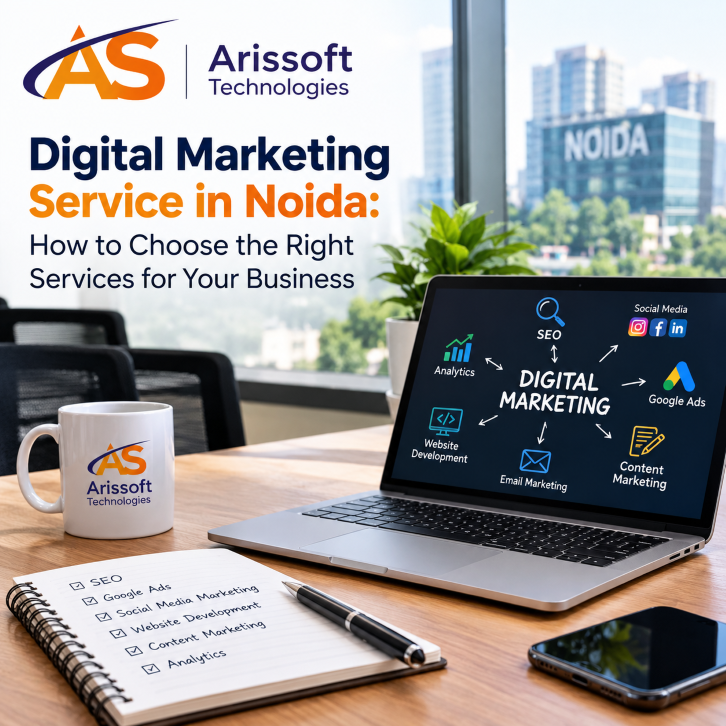 Digital Marketing Service in Noida: How to Choose the Right Services for Your Business
 How to Find the Best Digital Marketing Company in Noida: A Complete Business Guide
 Top 5 Leading Digital Marketing Companies in Noida for Business Growth
 Top Benefits of SEO Services – Boost Your Online Presence and Business Growth

.jpg)