
 How It Works and Why It Matters for SEO.jpg)
When you search for something on Google, you see a page containing different results, websites, ads, maps, videos, images, and other information. This page is called a Search Engine Results Page (SERP).
Understanding SERPs is important for businesses, website owners, bloggers, and SEO professionals. Your website may rank well, but if it does not attract clicks or appear in the right search features, you may still miss valuable traffic and potential customers.
In this guide, we will explain what SERP is, how it works, its main features, and why SERP visibility matters for SEO and business growth.
SERP stands for Search Engine Results Page. It is the page displayed by a search engine after a user enters a search query.
For example, if someone searches:
"Digital Marketing Agency in Noida"
Google may show:
The exact SERP can change depending on the search query, location, device, search history, and other factors.
A SERP begins when a user enters a search query into a search engine.
Search engines such as Google process the query and try to understand what the user wants. They then select and organize relevant information from their index.
The basic process includes:
The process starts when someone searches for a keyword or question.
Examples include:
Search engines try to understand the meaning and intent behind the search.
For example, a search for "SEO agency near me" generally indicates local service intent.
A search for "what is SEO" is more informational.
The search engine looks through its index to identify webpages that may answer the query.
Relevance can depend on factors such as content quality, topical relevance, website authority, usability, location, and many other signals.
The search engine orders results according to its ranking systems.
The goal is to provide users with useful and relevant information as quickly as possible.
Finally, the search engine displays a results page containing different types of information.
This is the SERP that users see.
Modern search results contain much more than traditional blue website links.
Organic results are unpaid listings that appear because a search engine considers the webpage relevant to the query.
A typical organic result may include:
SEO focuses heavily on improving organic visibility.
For example, if your website ranks on the first page for "SEO company in Noida", it can potentially receive relevant visitors without paying for every click.
Paid advertisements can appear above or below organic results.
Businesses use platforms such as Google Ads to promote their products or services for selected search terms.
Paid advertising and SEO are different strategies, but they can work together as part of a wider digital marketing plan.
A featured snippet is a highlighted answer that may appear near the top of Google's results for certain searches.
It can contain:
For example, a search such as "What is local SEO?" may show a short definition directly in the search results.
Well-structured content can improve the chances of being considered for certain search features, although there is no guaranteed method to obtain a featured snippet.
The People Also Ask (PAA) section displays related questions that users may have.
For example, for a search about SEO, users may see questions such as:
Including useful answers to relevant questions can help your content address broader search intent.
For local searches, Google may display a map and a group of local businesses.
For example:
"Digital marketing agency near me"
may generate local business results.
Local SEO helps businesses improve their visibility in relevant local searches.
Important local SEO activities can include:
Some searches display images prominently.
This is particularly common for searches related to:
Optimizing image filenames, alt text, surrounding content, image quality, and page relevance can help search engines understand your images.
Videos may appear directly within search results.
Video content can be particularly useful for:
Businesses can use platforms such as YouTube alongside their website to increase visibility across search results.
For product-related searches, search engines may display product listings, prices, images, stores, and other shopping information.
This is especially important for e-commerce businesses.
Knowledge panels can appear when a search engine has enough reliable information about a person, company, organization, place, or other entity.
They provide summarized information directly in the search results.
SERP ranking refers to the position of a webpage in search results for a particular query.
For example, if your webpage appears as the third organic result for:
"SEO services in Noida"
you can say that the page ranks in position three for that query.
However, rankings are not always fixed.
The results a person sees can vary based on factors such as:
Therefore, SEO should not focus only on one ranking position.
SERPs are important because they determine how users discover websites through search engines.
A strong SERP presence can make your business more visible to potential customers.
When your website appears for relevant searches, more people have an opportunity to discover your brand.
Higher visibility can result in more clicks and organic traffic.
For example, ranking for several relevant keywords can bring visitors to different pages of your website.
Even when users do not click immediately, appearing consistently in search results can increase brand recognition.
A business that regularly appears for relevant searches can become more familiar to its target audience.
Relevant organic traffic can contribute to lead generation.
For example, a website offering website development services may attract potential customers through searches such as:
The quality and intent of the traffic are often more important than traffic volume alone.
If your competitors appear in important search results and your business does not, they may receive customers who could otherwise discover your company.
Monitoring SERPs can help identify opportunities where your website can compete.
SERP analysis means studying the search results for a particular keyword before creating or optimizing content.
SEO professionals may examine:
For example, before targeting "local SEO for startups", you can analyze the current search results to understand what information users are looking for.
Enter your target keyword into Google.
Look at the first page carefully rather than checking only the first result.
Ask:
Search intent generally falls into categories such as:
Your content should match the intent behind the query.
Review the pages that currently rank.
Look at:
Do not simply copy competitors. Find ways to provide clearer and more useful information.
Look for:
These features can reveal additional content opportunities.
Create content that directly addresses the user's needs.
Focus on:
SEO is the process of improving a website's visibility in search engines.
SERP is where that visibility becomes visible to users.
In simple terms:
SEO → improves search visibility → SERP → users discover your website → clicks and potential conversions
This is why SEO professionals regularly monitor SERPs.
There is no single technique that guarantees a top position. SEO is an ongoing process.
However, businesses can improve their overall search visibility by following good SEO practices.
Write content that genuinely answers the user's question.
Avoid creating pages only to insert keywords.
Choose keywords that match your products, services, audience, and search intent.
For example, a local digital marketing agency may target relevant phrases such as:
SEO Services in Noida
Google Ads Management Services
The goal should be relevance rather than simply targeting a large number of keywords.
Your title should clearly communicate what the page is about.
A good title can improve relevance and encourage users to click.
4. Write Useful Meta Descriptions
Meta descriptions help summarize the page for search users.
Although they are not a direct ranking factor, a clear description can help communicate the value of the page.
A slow website can create a poor user experience.
Optimize:
Many people use smartphones to search online.
Your website should work properly across different screen sizes.
Internal linking helps users and search engines discover related pages on your website.
For example, an article about Local SEO could link to relevant pages about:
Relevant and trustworthy backlinks can help strengthen a website's authority.
Focus on earning useful links rather than collecting large numbers of low-quality links.
If you serve customers in a specific location, local SEO can be especially valuable.
Keep your business information accurate and consistent, optimize your Google Business Profile, and build useful local content.
Use tools such as Google Search Console and other SEO platforms to monitor:
This data can help you identify pages that need improvement.
SERP CTR means Search Engine Results Page Click-Through Rate.
It represents the percentage of users who click a search result after seeing it.
The basic formula is:
CTR = (Clicks ÷ Impressions) × 100
For example, if your page receives 100 impressions and 5 clicks:
CTR = 5%
CTR can vary significantly depending on the query, position, SERP features, brand recognition, and search intent.
Ranking number one is valuable, but SEO success should not be measured only by rankings.
A better approach is to consider:
For example, ranking first for a keyword that generates no business value may be less useful than ranking fifth for a highly relevant keyword that generates qualified leads.
|
SERP |
SEO |
|
Search results page |
Search optimization process |
|
Shows information to users |
Improves website visibility |
|
Includes organic and paid results |
Primarily focuses on organic visibility |
|
Changes based on queries |
Requires ongoing optimization |
|
Visible to search users |
Performed by website owners and SEO professionals |
In simple terms, SERP is the search results page, while SEO is one of the main ways businesses work to improve their visibility within those results.
Keyword Stuffing
Using the same keyword excessively can make content unnatural and difficult to read.
Creating Content Only for Search Engines
Content should be created primarily to help users.
Ignoring Search Intent
A page may contain the right keyword but still fail to satisfy what the searcher wants.
Focusing Only on One Keyword
Modern SEO should cover related topics and concepts naturally.
Ignoring Mobile Users
A website that works poorly on smartphones can provide a weak user experience.
Buying Low-Quality Backlinks
Poor-quality link-building practices can create SEO risks instead of long-term value.
Expecting Immediate Results
SEO usually requires consistent work, testing, content improvement, technical optimization, and monitoring.
SERP Best Practices for Businesses
A practical SERP-focused SEO strategy should include:
SERP stands for Search Engine Results Page.
A SERP is the page displayed by a search engine after a user searches for something. SEO aims to improve a website's visibility within relevant search results.
SERP is important because it is where users discover websites, businesses, products, services, and information through search engines.
No. SERP is the search results page, while SEO is the process of optimizing a website to improve its organic search visibility.
Create helpful content, match search intent, improve technical SEO, optimize your website for mobile users, build relevant authority, strengthen internal links, and continuously monitor and improve your pages.
Can SEO guarantee a #1 SERP position?
No reputable SEO strategy can guarantee a permanent number-one ranking for a specific keyword. Search results are competitive and can change over time.
SERP features are additional search-result elements beyond traditional organic listings. Examples include featured snippets, People Also Ask, local results, images, videos, shopping results, and knowledge panels.
Search Engine Results Pages (SERPs) are at the center of how people discover information and businesses online.
For businesses, appearing prominently for relevant searches can increase visibility, attract qualified visitors, build brand awareness, and create opportunities for leads and sales.
However, successful SEO is not simply about achieving a number-one ranking. A strong strategy focuses on search intent, helpful content, technical performance, user experience, authority, local visibility, and measurable business results.
If you understand how SERPs work and regularly analyze them, you can make better SEO decisions and create content that has a stronger chance of reaching the right audience.
For a growing business, SERP visibility should be treated as part of a long-term digital marketing strategy rather than a one-time SEO activity.
 How Does a Professional Best Web Development Company in Lucknow Build a High-Performing Website?
 Website Designing & Development Company in Meerut - Arissoft Technologies
 Which Website Development Company in Noida Is Right for Your Business to Grow Online?
 How Can a Digital Marketing Company in Noida Help Grow Your Business?
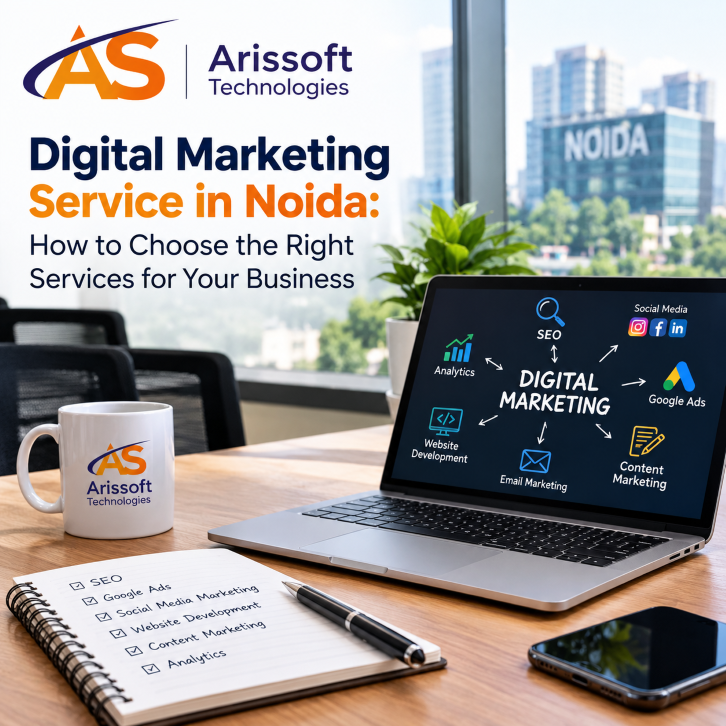 Digital Marketing Service in Noida: How to Choose the Right Services for Your Business
 How to Find the Best Digital Marketing Company in Noida: A Complete Business Guide

.jpg)