
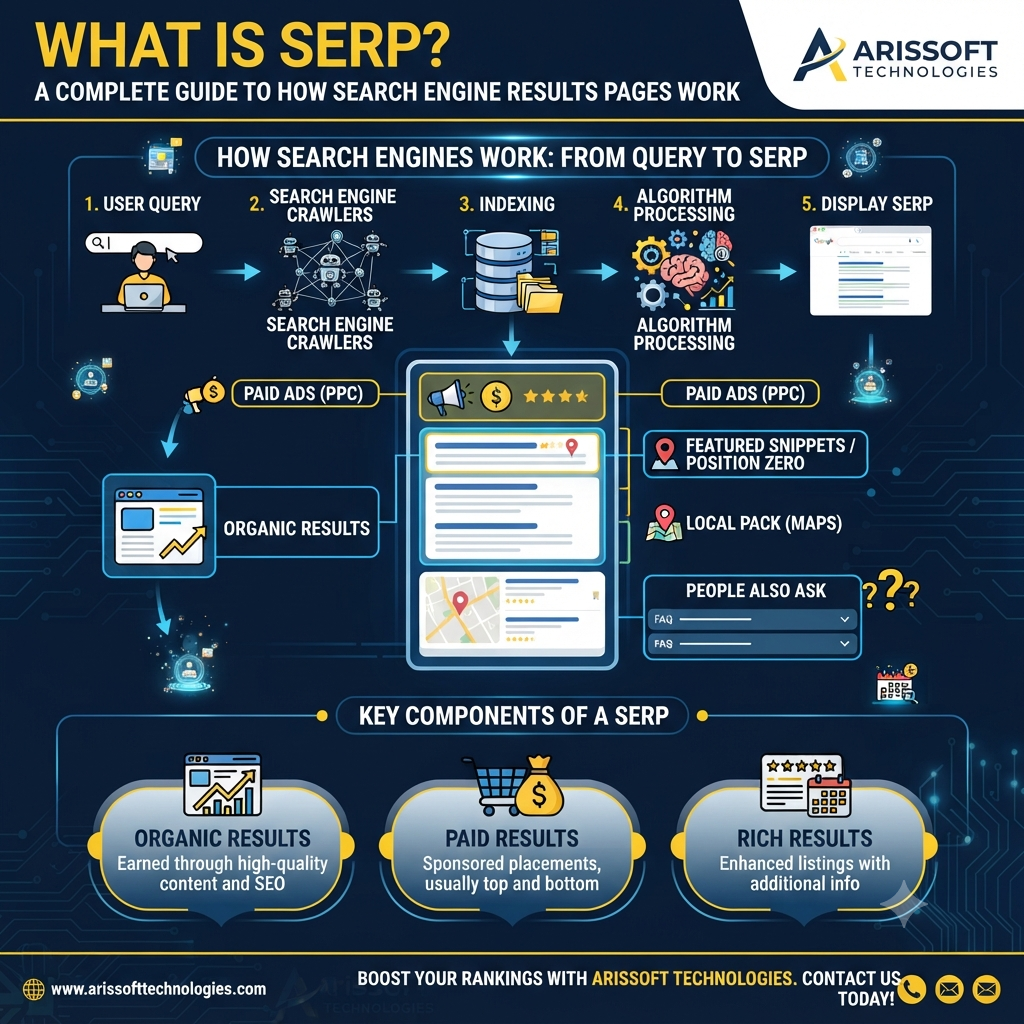
When people search for something on Google, Bing, or another search engine, they see a page filled with different results. This page is called a Search Engine Results Page (SERP).
SERPs are an important part of SEO and digital marketing. They determine how websites, businesses, advertisements, videos, images, and other content are presented to people after a search.
Understanding what SERP is, how it works, and what appears on a SERP can help businesses improve their online visibility and attract more visitors.
SERP stands for Search Engine Results Page. It is the page displayed by a search engine after a user enters a search query.
For example, if someone searches for:
Google may display:
The exact SERP layout changes depending on the search query, location, device, search intent, and other factors.
A SERP is created after a user enters a search query. The search engine processes the query and looks through its index to find relevant information.
The basic process involves several steps:
1. Crawling
Search engines use automated programs, often called crawlers or bots, to discover webpages and follow links across the internet.
2. Indexing
After discovering a webpage, the search engine analyzes its content and stores information about it in its index when the page is eligible for indexing.
3. Understanding the Search Query
The search engine tries to understand what the user wants to find.
For example:
"Best hospitals in Noida"
has a different search intent from:
"How does SEO work?"
4. Ranking
The search engine evaluates relevant pages using many signals and determines which results are most useful for the particular query.
5. Displaying the SERP
Finally, the search engine creates a results page containing the information and features it believes will best answer the user's query.
Modern SERPs contain much more than traditional blue website links.
1. Organic Search Results
Organic results are unpaid listings that appear because a search engine considers them relevant and useful.
A typical organic result may include:
Ranking higher in organic results is one of the main goals of SEO.
2. Paid Search Ads
Paid advertisements may appear above or below organic results.
Businesses use platforms such as Google Ads to promote products and services for relevant searches.
Paid results are normally identified as advertisements or sponsored content.
3. Featured Snippets
A featured snippet is a highlighted result that may appear near the top of a SERP.
It can provide a short answer to a question directly on the search results page.
Common formats include:
Creating clear, well-structured content can improve a website's ability to be considered for these types of search features, although there is no guaranteed method of obtaining one.
4. People Also Ask
The People Also Ask section displays related questions that users may want answered.
For example, someone searching for SEO may see questions such as:
Including useful answers to relevant questions can make content more comprehensive.
5. Local Pack
For searches with local intent, search engines may show a map and a group of local businesses.
For example:
"Dentist near me"
may display nearby dental clinics along with information such as business names, locations, ratings, opening hours, and other details.
This makes Local SEO agency Noida particularly important for local businesses.
6. Image Results
Search engines may display images when visual content is useful for the query.
Image results are common for searches related to:
Businesses can improve image visibility by using descriptive file names, relevant alternative text, appropriate surrounding content, and optimized images.
7. Video Results
Videos can also appear in search results.
This is particularly common for:
Video SEO can therefore support a broader search visibility strategy.
8. Shopping Results
For product-related searches, search engines may show shopping listings containing product images, prices, retailers, and other information.
These results help users compare products before visiting a website.
9. Knowledge Panels
A knowledge panel can appear when a search engine has structured information about a person, organization, place, brand, or other entity.
It may show important facts and links in a dedicated information area.
Why Is SERP Important for SEO?
SERP visibility is important because users often interact with the search results before visiting a website.
A strong SEO strategy aims to improve a website's visibility for relevant searches.
Higher visibility can help a business:
However, ranking alone is not enough. The title, description, content, search intent, brand reputation, and overall user experience can also influence whether someone chooses a particular result.
SERP ranking refers to the position of a webpage or result on a search engine results page for a particular search query.
For example, if your webpage appears as the first organic result for:
"SEO company in Noida"
your page has a strong ranking for that particular query.
A webpage can rank differently for different keywords and locations.
SERP Position vs. Ranking
These terms are often used interchangeably, but they can have slightly different meanings.
Ranking generally refers to how a result performs for a search query.
Position refers more specifically to where a result appears on the results page.
For example, a webpage could rank highly for one keyword but appear much lower for another.
What Factors Can Affect SERP Rankings?
Search engines use many signals to determine which results should appear and in what order. No single factor guarantees a particular ranking.
Important areas include:
High-Quality Content
Content should provide useful, accurate, original, and relevant information that satisfies the user's search intent.
Search Intent
Understanding why someone searches for a keyword is essential.
Search intent may be:
Your content should match the purpose behind the search.
Website Experience
A website should be easy to navigate and work well across desktop and mobile devices.
Factors such as page usability, loading performance, and accessibility can contribute to a better user experience.
Relevant Keywords
Keywords help search engines understand the subject of a webpage.
However, keywords should be used naturally rather than repeatedly or unnaturally.
Backlinks and Authority
Relevant, trustworthy links from other websites can contribute to a site's authority and visibility.
Quality is generally more important than simply collecting a large number of links.
Technical SEO
Technical SEO helps search engines discover, crawl, understand, and index website content.
Important areas include:
What Is SERP Analysis?
SERP analysis means studying the search results for a particular keyword to understand what search engines are currently showing.
SEO professionals may analyze:
SERP analysis can help identify what type of content is likely to satisfy users.
How to Perform a Basic SERP Analysis
You can follow these steps:
Step 1: Search Your Target Keyword
Enter your target keyword into Google or another search engine.
Step 2: Study the Top Results
Look at the pages ranking near the top.
Ask:
Step 3: Identify Search Intent
Determine whether users want information, a product, a service, a specific website, or a local business.
Step 4: Check SERP Features
Look for:
Step 5: Create Better Content
Build content that directly satisfies the user's needs and provides useful information in a clear format.
How Can Businesses Improve Their SERP Visibility?
Businesses can improve their search visibility by combining different SEO techniques.
Focus on Relevant Keywords
Choose keywords that match your services, products, audience, and business goals.
Create Helpful Content
Publish content that answers real customer questions instead of writing only for search engines.
Optimize Page Titles
Create clear and relevant page titles that accurately describe the page.
Improve Meta Descriptions
A useful meta description can explain what users can expect from the page and encourage relevant clicks.
Optimize Website Structure
Use clear headings, internal links, descriptive URLs, and logical navigation.
Improve Local SEO
For businesses serving a specific area, optimize your Google Business Profile, local landing pages, business information, reviews, and local citations where appropriate.
Build Quality Backlinks
Earn relevant links through useful content, digital PR, partnerships, industry resources, and other legitimate methods.
Monitor Performance
Use SEO tools and analytics platforms to monitor:
What Is SERP Click-Through Rate?
SERP click-through rate (CTR) is the percentage of users who click a search result after seeing it.
For example, if 1,000 people see your result and 50 click it:
CTR = 5%
CTR can vary significantly depending on the query, ranking position, search feature, device, brand recognition, and user intent.
SERP and SEO: What Is the Difference?
SERP and SEO are connected but they are not the same thing.
SERP is the search results page shown to users.
SEO is the process of improving a website's visibility in unpaid search results.
In simple terms:
SEO helps your website compete for visibility on SERPs.
SERP vs. Organic Search Results
A SERP is the entire search results page.
Organic results are only one part of that page.
A modern SERP can include organic listings, advertisements, maps, images, videos, shopping results, featured snippets, and other search features.
Why SERP Can Change Frequently
Search results are not always fixed.
SERPs can change because of:
Therefore, SEO should be treated as an ongoing process rather than a one-time activity.
Common SERP Mistakes Businesses Should Avoid
Keyword Stuffing
Repeating the same keyword excessively can make content difficult to read and may not help rankings.
Creating Content Only for Search Engines
Content should primarily help users.
Ignoring Search Intent
A page may target the right keyword but still perform poorly if it does not satisfy what users actually want.
Using Clickbait Titles
Titles should accurately represent the content on the page.
Ignoring Mobile Users
A large amount of search activity takes place on mobile devices, so websites should provide a good mobile experience.
Neglecting Local SEO
Local businesses can miss valuable opportunities if they focus only on broad keywords and ignore location-based searches.
Frequently Asked Questions About SERP
What does SERP stand for?
SERP stands for Search Engine Results Page.
What is the purpose of a SERP?
A SERP presents results and search features that a search engine believes are relevant to a user's query.
Is SERP the same as Google?
No. Google is a search engine. A SERP is the results page generated after a user performs a search.
What is SERP in SEO?
In SEO, SERP refers to the search results page where webpages compete for visibility for specific search queries.
How can I improve my SERP ranking?
Focus on helpful content, search intent, technical SEO, website experience, relevant keywords, internal linking, authority, and other SEO best practices.
Is a higher SERP position always better?
Generally, higher visibility can provide more opportunities for clicks, but the value of a position depends on the query, search features, intent, and whether the result attracts the right audience.
Final Thoughts
Understanding SERP is essential for anyone working in SEO or digital marketing.
Search engine results pages have evolved beyond simple lists of website links. Today, they can include advertisements, maps, videos, images, featured snippets, shopping results, local businesses, and other search features.
For businesses, the goal should not simply be to rank for as many keywords as possible. The better approach is to understand search intent, create useful content, improve the website experience, and build strong organic and local visibility for searches that matter to the business.
A well-planned SEO strategy can help businesses gain greater SERP visibility, attract relevant visitors, generate enquiries, and build long-term online presence. SEO agency Noida
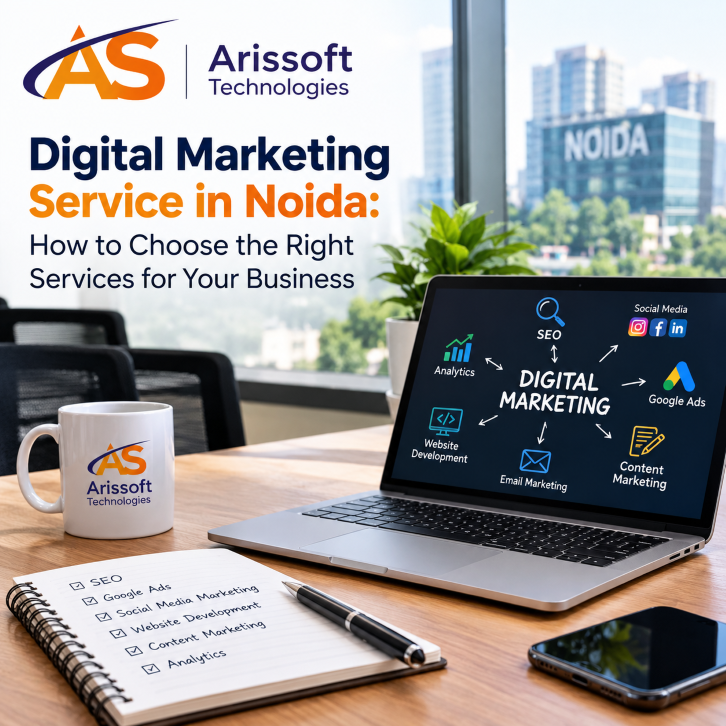 Digital Marketing Service in Noida: How to Choose the Right Services for Your Business
 How to Find the Best Digital Marketing Company in Noida: A Complete Business Guide
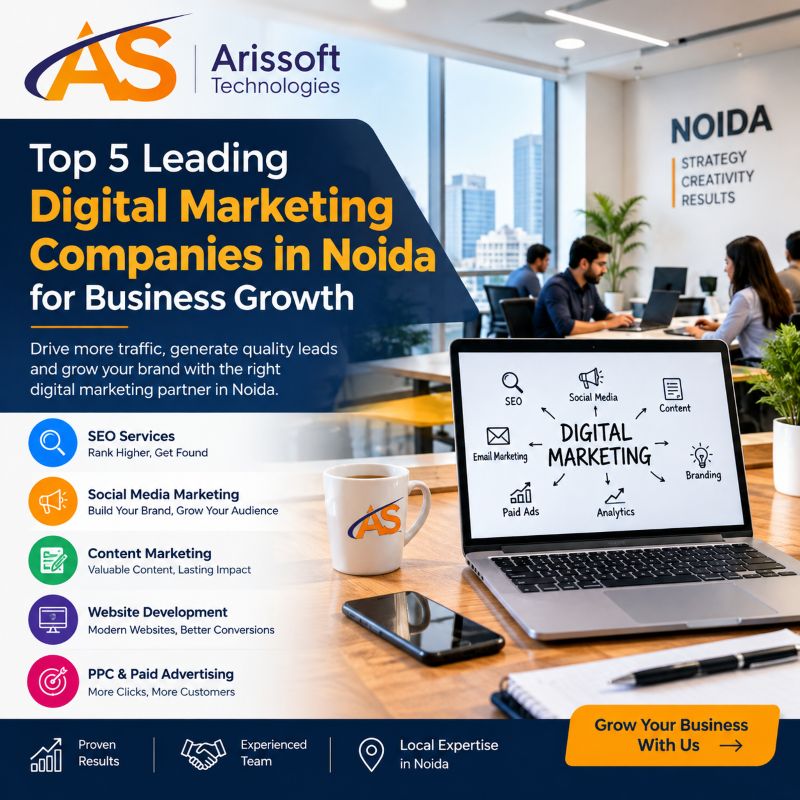 Top 5 Leading Digital Marketing Companies in Noida for Business Growth
 Top Benefits of SEO Services – Boost Your Online Presence and Business Growth
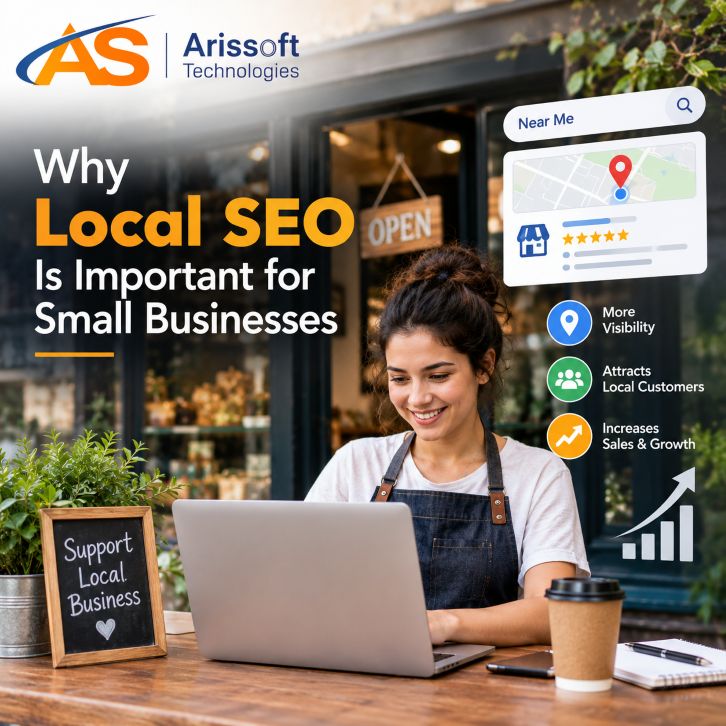 Why Local SEO Is Important for Small Businesses
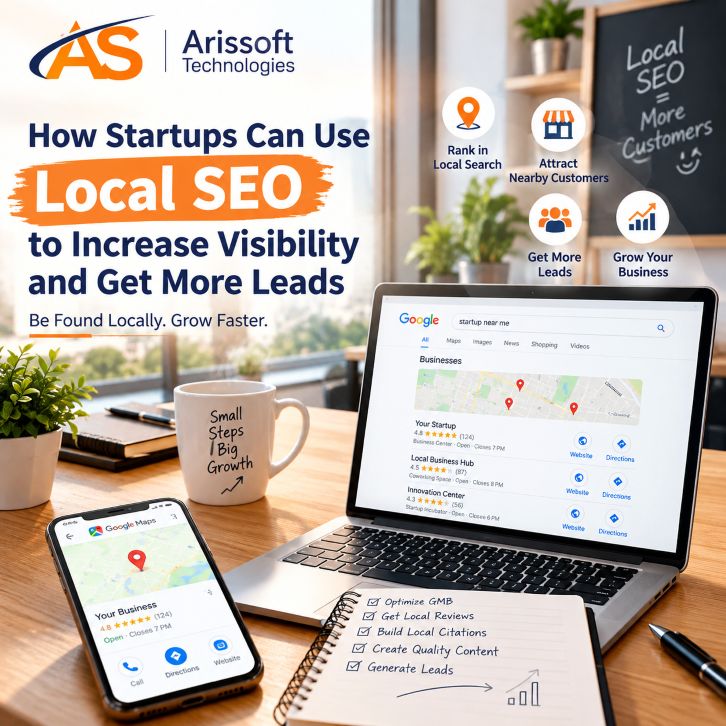 How Startups Can Use Local SEO to Increase Visibility and Get More Leads

.jpg)